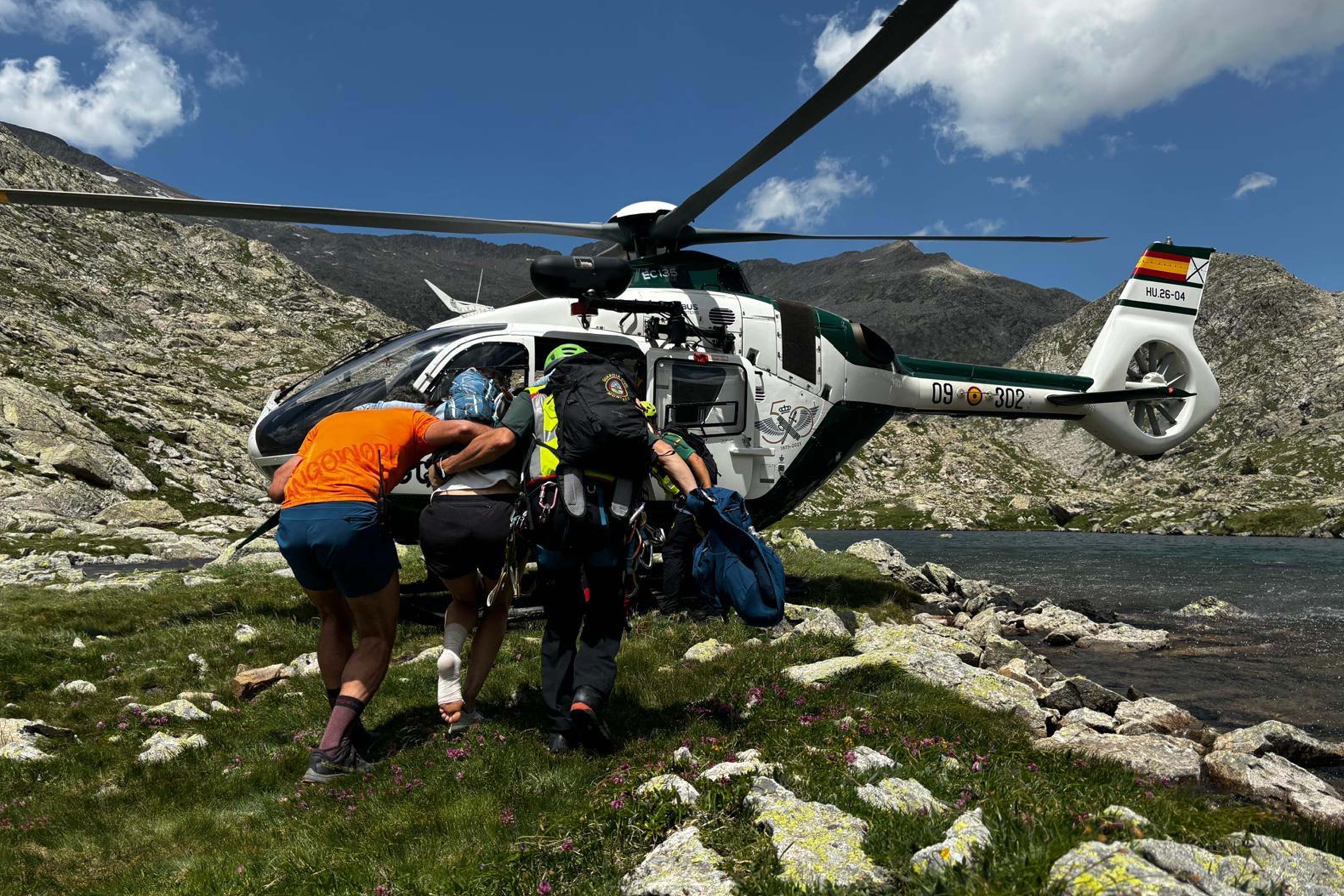
Trail running in high mountain terrain is one of the most complete experiences the outdoor world has to offer. It's also one that demands the greatest respect. Every year, mountain rescue services attend incidents involving athletes in excellent physical condition who nonetheless neglected their planning or equipment.
Accidents in trail running
Many trail runners who suffer accidents in the mountains are highly fit athletes. The problem doesn't lie there. In fact, the answer is counterintuitive. Athletic condition creates a false sense of control that can lead to underestimating the environment. In high mountain terrain, fitness is necessary — but not sufficient. What makes the difference is the combination of three factors: planning, equipment and mountain technique.
A runner who has trained for an ultra may have the aerobic capacity to cover long distances and significant elevation gain, but that doesn't always mean they can read a snowfield, anticipate a storm or know what to do if they twist an ankle at 2,500 metres without mobile coverage.
How to plan a trail running route in high mountain terrain?
Before heading out, planning is non-negotiable. Good preparation can save your life. And it goes far beyond tracing a route on your phone. You need to know the terrain, check the weather, communicate your plan, adapt the activity and more.
-
Study the full route: distance, elevation, terrain type, technical sections, snowfields, water points, refuges and escape routes. Don't just look at the track — you need to understand the route and know the area you'll be moving through.
-
Check the weather using specialist mountain sources and be aware of common mountain phenomena, such as summer storms that can build quickly — especially in the afternoon — even if you set off in the morning under a clear sky. If the forecast is uncertain, apply the most conservative principle: you can always go back tomorrow.
-
Communicate your plan. If you're going alone, be aware that it's not the most advisable approach. If you do it anyway, let someone you trust know where you're going, which route you're taking, what time you expect to return, etc.
-
Adapt the pace to your group. If you're running with others, the route, intensity and speed must be suited to the least prepared person in the group. Pushing the pace in those conditions can leave someone blocked in a technical section or exhausted hours from the finish. Everyone in the group must also know the route.
Training for trail running
Intervals, long runs, easy recovery runs — every trail runner knows the basics. But there are other types of training that will help you become a more complete athlete: strength work, proprioception and terrain technique.
- Strength: especially lower body and core, to protect the areas that suffer most and prevent injuries to knees, hips, ankles and back.
- Proprioception: balance and joint stability work will give you greater response capacity on uneven terrain and help reduce the risk of sprains.
- Downhill technique: running downhill fast isn't just about confidence. Learning to read the terrain, choose the right foot placement and manage speed is a skill that can be trained.
What to pack: the minimum essential gear for trail running in high mountain terrain
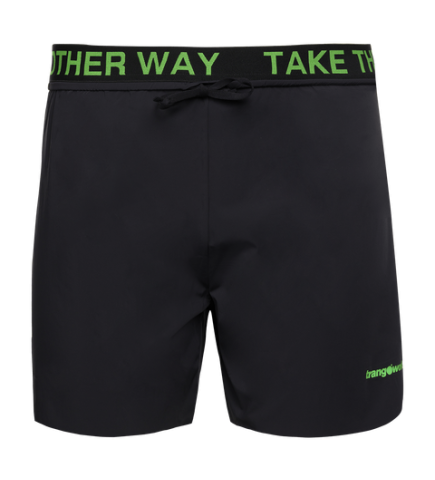
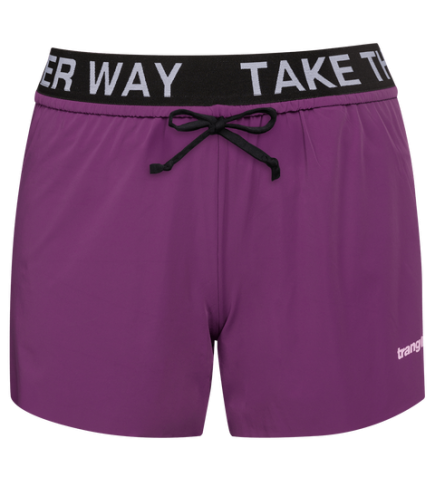
In trail running, your pack must be part of your kit — it's just as important as your shoes or the clothes you wear. Depending on your route, you'll need to carry more or less, but the absolute minimum is:
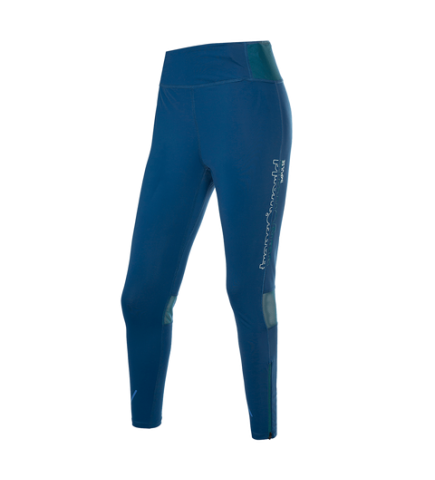
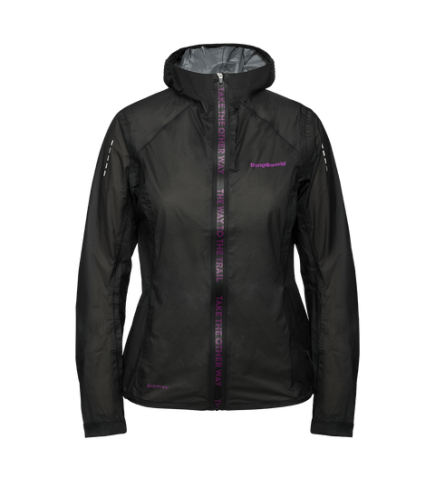
- Waterproof windproof jacket with hood and long sleeves: the temperature change when you stop or gain altitude is dramatic.
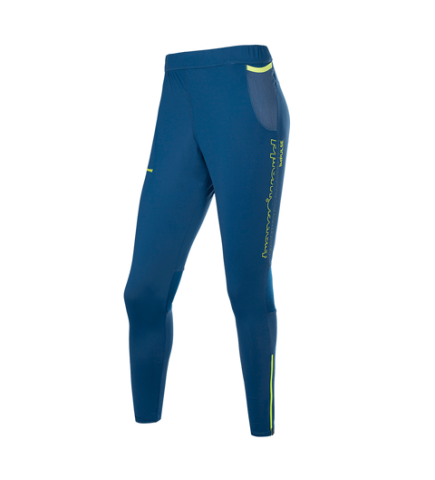
- Long tights: essential if there are snowfields on the route, to avoid burns in the event of a slide.
- Emergency thermal blanket and whistle: they weigh almost nothing and could be decisive in an emergency.
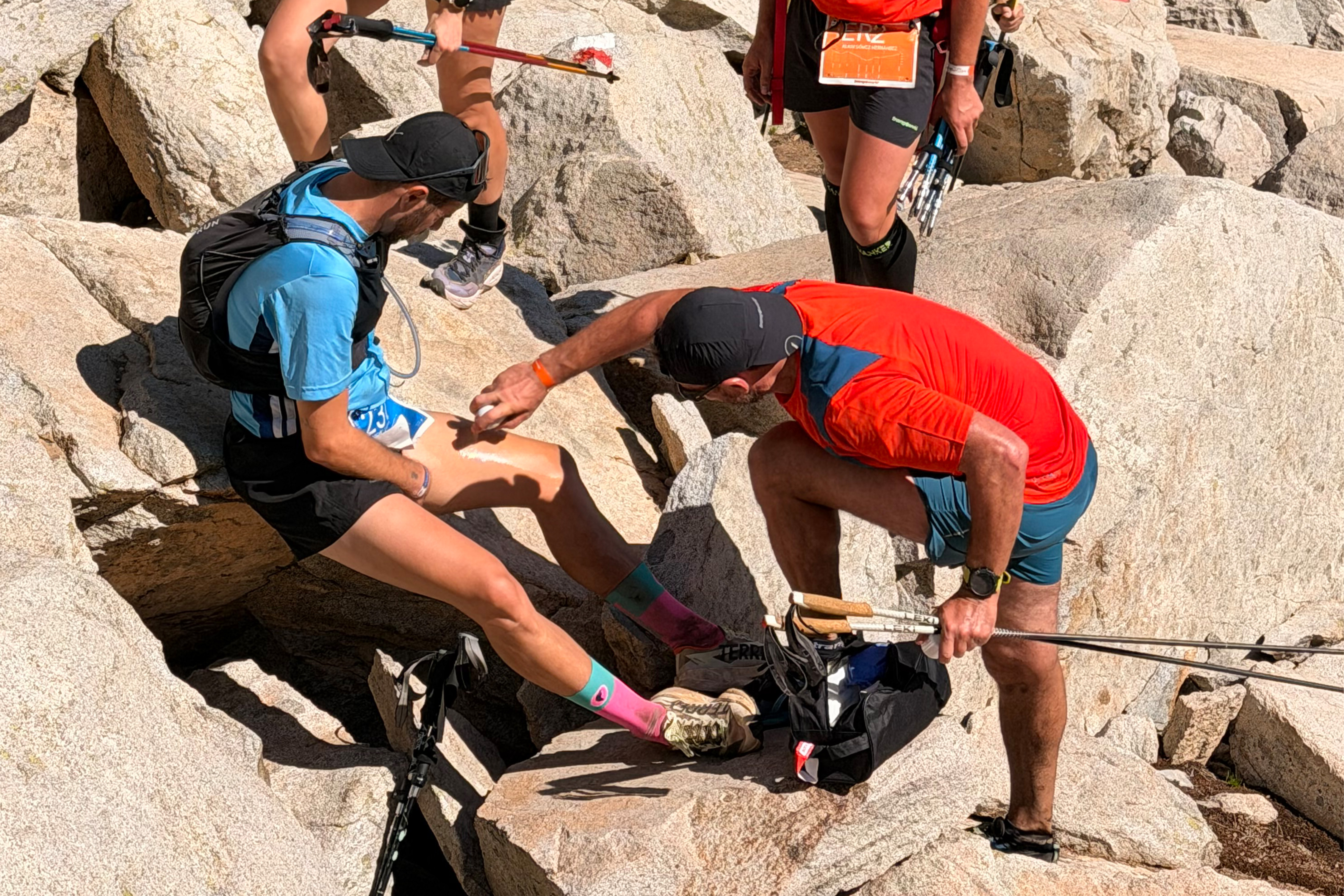
- Basic first aid kit: plasters, bandage, medical tape, painkiller, antiseptic.
- Sufficient food and hydration: calculate a little more than you think you'll need — energy expenditure skyrockets in high mountain terrain.
- Head torch with spare batteries: even if you don't plan to run in low light, a delay can change everything.
- Sunglasses and a cap: to protect yourself from the sun.
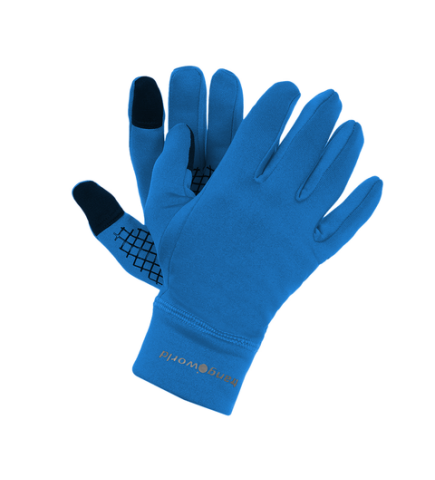
- Thin gloves: useful when setting off very early or if the weather deteriorates.
- Phone with full battery + power bank: download the track before you leave and save the emergency number (112).
- GPS with the route downloaded, whether on your phone or your watch.
- Personal identification.



Snow on trail running routes
One of the most common mistakes in high mountain trail running is failing to account for the presence of snow outside of winter. In the Pyrenees, many routes cross snowfields well into July, and some glaciers retain ice throughout the year.
When are trail running crampons sufficient?
Trail running crampons are designed for small snowfields with a gentle gradient and soft snow. They're a useful tool in those conditions, but they are not a substitute for mountaineering equipment on technical terrain. If the snowfield is long, steep or has ice, the safest course of action is to turn back.
Before setting off, check the state of the route with local refuges or mountain guides. They know the actual condition of the terrain that day — not what appeared in last week's Instagram photos.
Also remember that on any section with snow you should carry long tights, because in the event of a slide, exposed skin suffers serious burns from friction with the snow.
During the activity: signals to watch for
Planning doesn't end when you start moving. In the mountains, you need to stay actively alert at all times.
Meteorological warning signs:
- Cumulus clouds growing rapidly in height.
- A sudden drop in temperature with gusting wind.
- Distant thunder, even if the sky above you is clear.
- If these signs appear, don't wait for the storm to arrive. Descend to lower ground, move away from ridges and summits and find shelter away from isolated trees and rock faces.
Physical warning signs:
- Cramps or unusual muscle weakness.
- Disorientation or difficulty making decisions.
- Increasing joint pain.
- The golden rule: when in doubt, the mountain will still be there tomorrow.