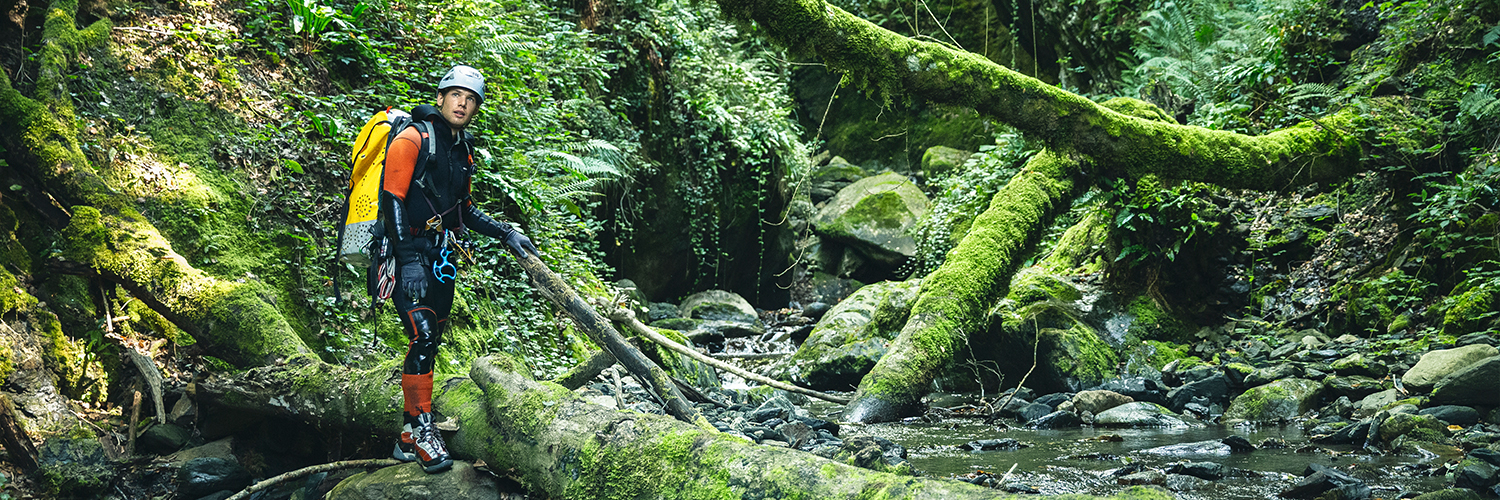
Canyoneering is one of those mountain sports that combines adrenaline, technique and a unique connection with nature. Descending canyons, swimming in crystal-clear water, jumping into pools and abseiling down rock faces is much more than a sport — it's a way of exploring wild places from the inside. It's also a discipline that demands preparation, technique and experience to be practised safely.
Daniel and Miguel Oury, Trangoworld ambassadors and reference figures in exploration canyoneering, share their favourite spots in the world for the sport — from the hidden canyons of the Himalayas to the hidden gems of the Pyrenees and the Sierra de Guara — and reflect on what it means to face these descents with respect, preparation and an adventurous spirit.
What is the best place in the world for canyoneering?
For us, without any doubt, the Himalayan mountain range in Nepal. This destination offers not only pure adventure but also a deep cultural impact that greatly enriches the experience.
In the remote Lamabagar valley, enormous walls rise up to 5,000 metres in altitude. Between them hide spectacular canyons whose exploration represents a sporting and logistical challenge of the highest order.
Entering such a wild environment for the first time — being the first human beings to descend it — is a life-changing experience. Exploration canyoneering in its purest form, where each descent requires meticulous preparation and the reward is immense.
During our 2024 expedition with the ECH group we explored several canyons, among them "La Bella" and "La Bestia": one for its breathtaking beauty, the other for its extreme difficulty. Guess which is which…
Where to go canyoneering in Spain? The best spots
Barranco de Núria and Gorges del Freser — Catalan Pyrenees
One of the most magical spots in Spain for canyoneering, in our opinion, is the area around the Olla de Núria, deep in the Catalan Pyrenees.
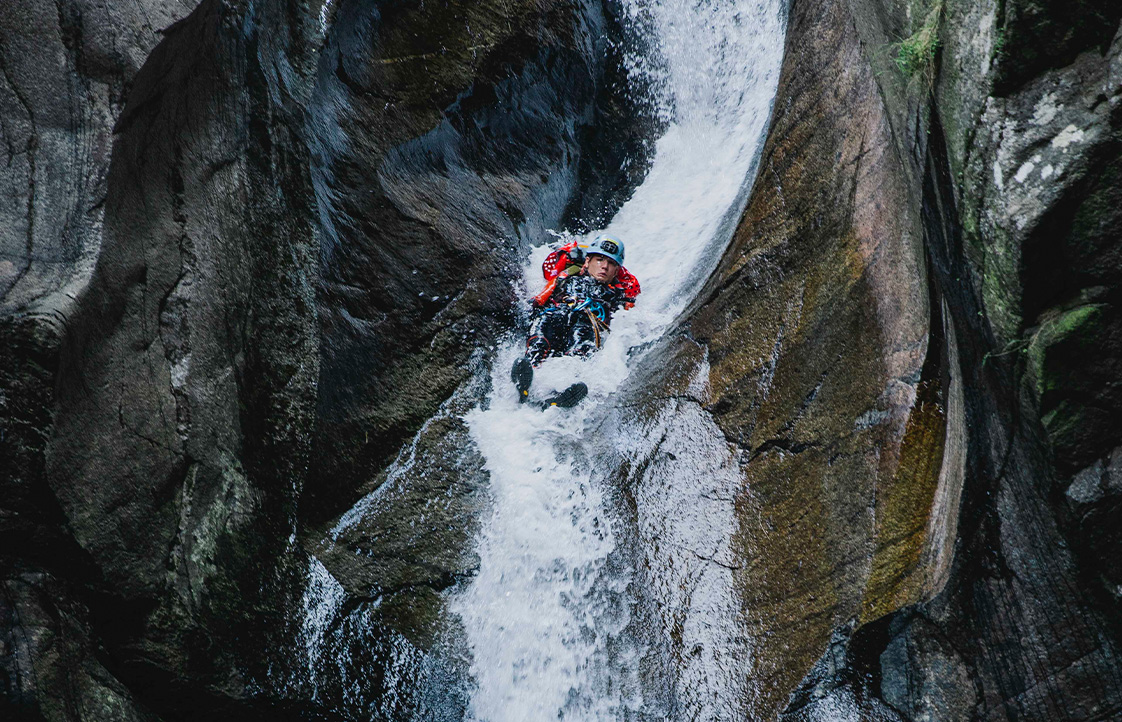
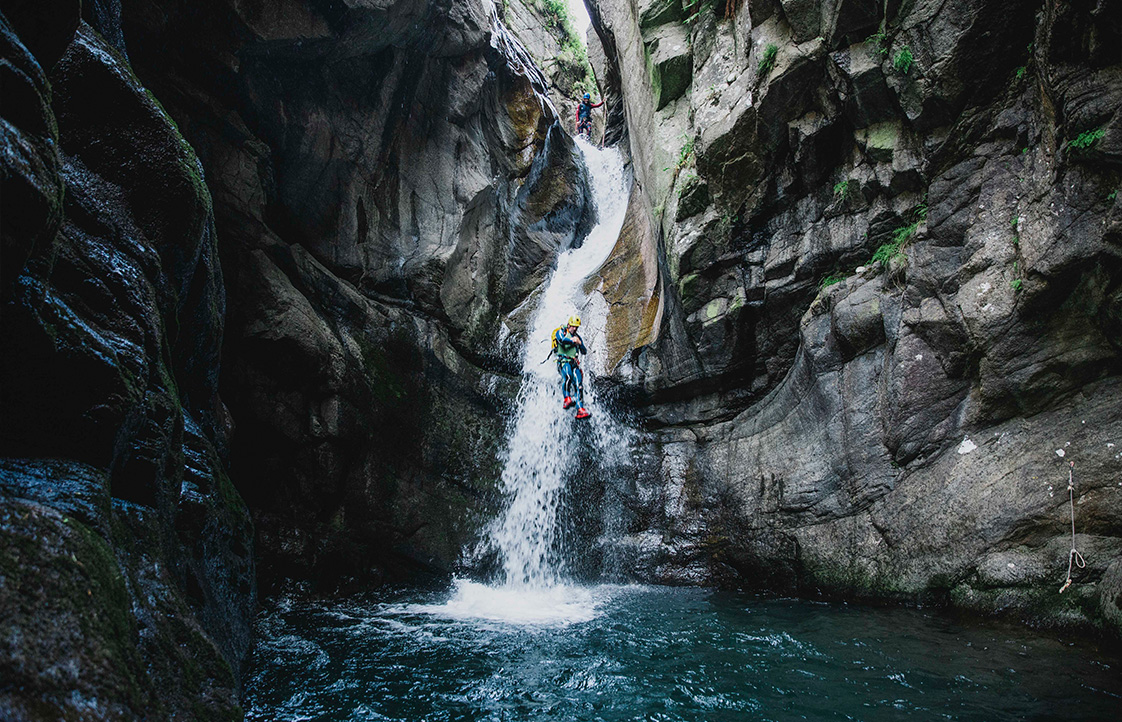
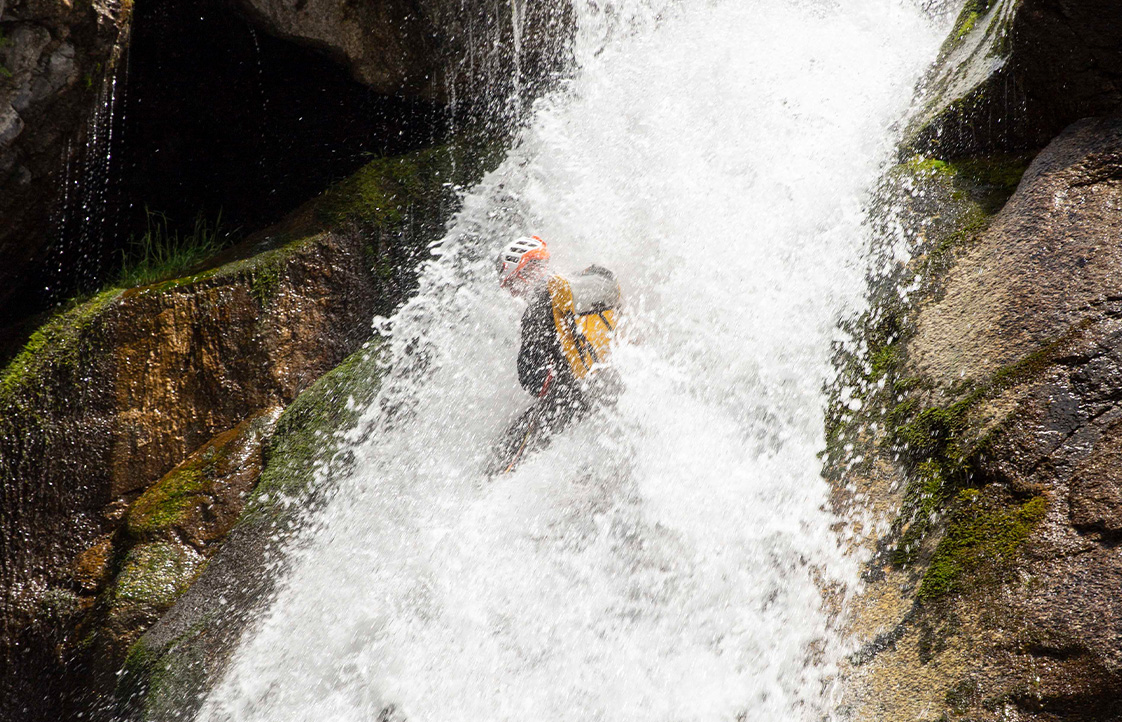
There you'll find the Barranco de Núria: a genuine natural water park, enormous fun and technically demanding at the same time. At high water levels it requires maximum caution — you can never let your guard down, and assessing conditions carefully before entering is always essential. Natural slides and water jumps follow one after another along a dynamic, thrilling route with an enclosed character that makes it unlike anywhere else.
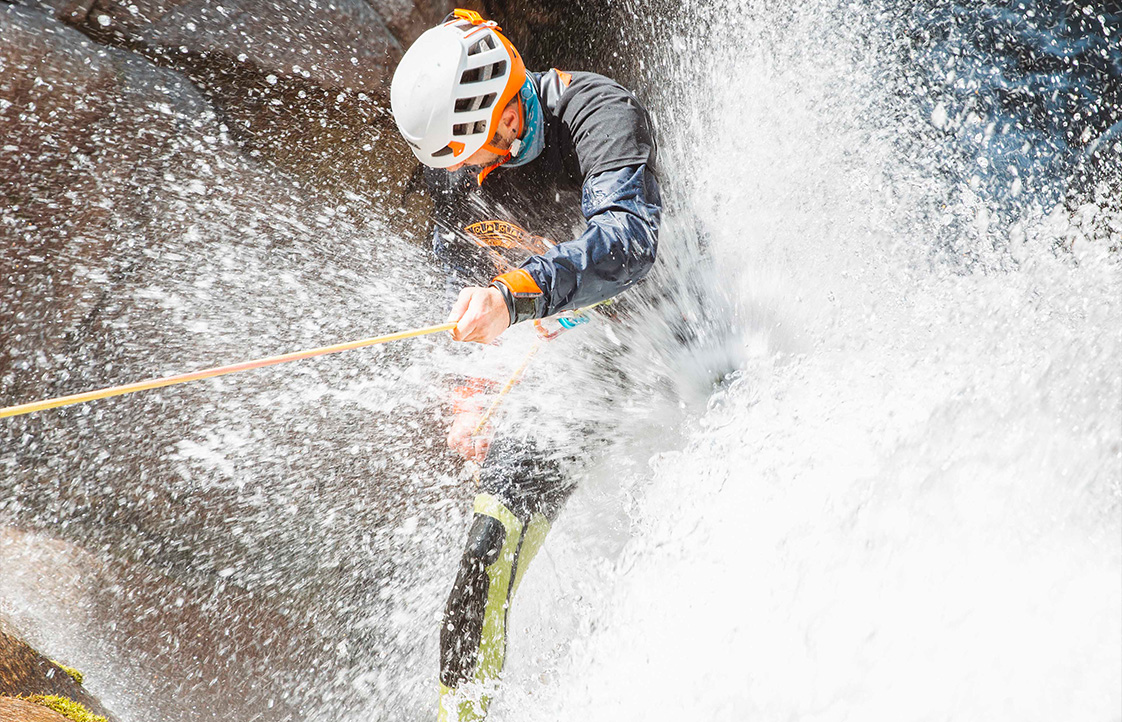
Nearby, the Gorges del Freser offer a more technical and demanding experience. It's a sport canyon, open and with a strong alpine character. The granite formations sculpted by the water are truly spectacular. Its long approach and 18 abseils guarantee an intense day that satisfies even the most demanding appetite for adventure.
Which canyon should you choose based on your level?
Canyons for beginners: Sierra de Guara, Huesca
Canyoneering is a fun and exciting sport that lets you discover unique landscapes and natural areas. But it's essential to choose your canyon carefully and match it to your abilities and experience.
If we had to take someone for the first time with the aim of getting them hooked forever, we'd choose the Sierra de Guara in Huesca without hesitation. This canyoneering paradise offers options for all levels, with several descents that are ideal for enjoying from the very first minute.
If what you're looking for is pure fun — jumps into turquoise pools and a stunning setting — the Barranco de la Peonera is the perfect choice. Known as the "natural Aqualandia", it's a fun, refreshing experience and ideal for getting started in the sport with a huge smile on your face.
Canyons for experts: Gave du Yèse, French Pyrenees
We're particularly drawn to the more complex canyons — those that, alongside demanding technique and endurance, retain a genuine spirit of exploration.
We love the idea of entering places where there may be no existing rigging and where we have to improvise and install gear on the go. That's why we always carry installation equipment with us.
The ingredients we value most in a canyon are: scale, a demanding approach, significant elevation drop, numerous abseils and, above all, that completing it from start to finish represents a genuine challenge.
What is the Gave du Yèse and why is it one of the hardest canyons in the Pyrenees?
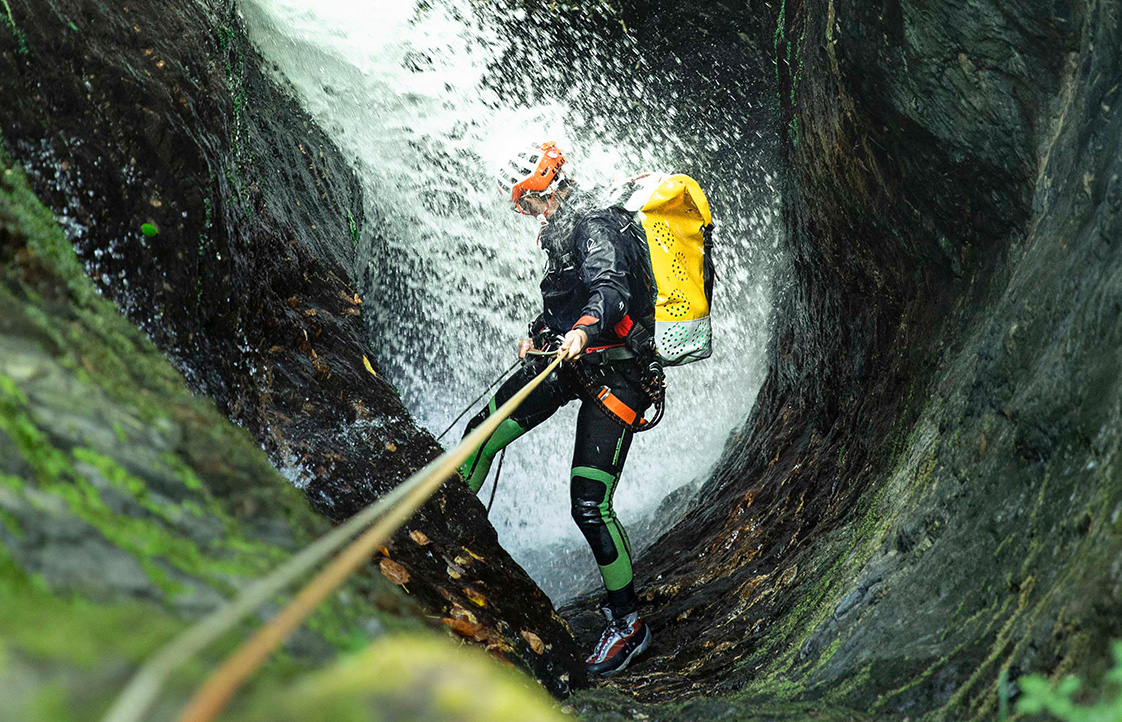
Under this philosophy, one of the descents that has marked us most is the Gave du Yèse, in the French Pyrenees, very close to the Spanish border. It's a tough, extremely slippery and almost endless canyon: the activity can last between 12 and 16 hours.
It has everything: open sections with an alpine character in the upper reaches and narrower, enclosed lower sections with strong water flow. Although there are escape routes and it can be split into sections, what would be the point of the full challenge if you don't tackle it from start to finish?
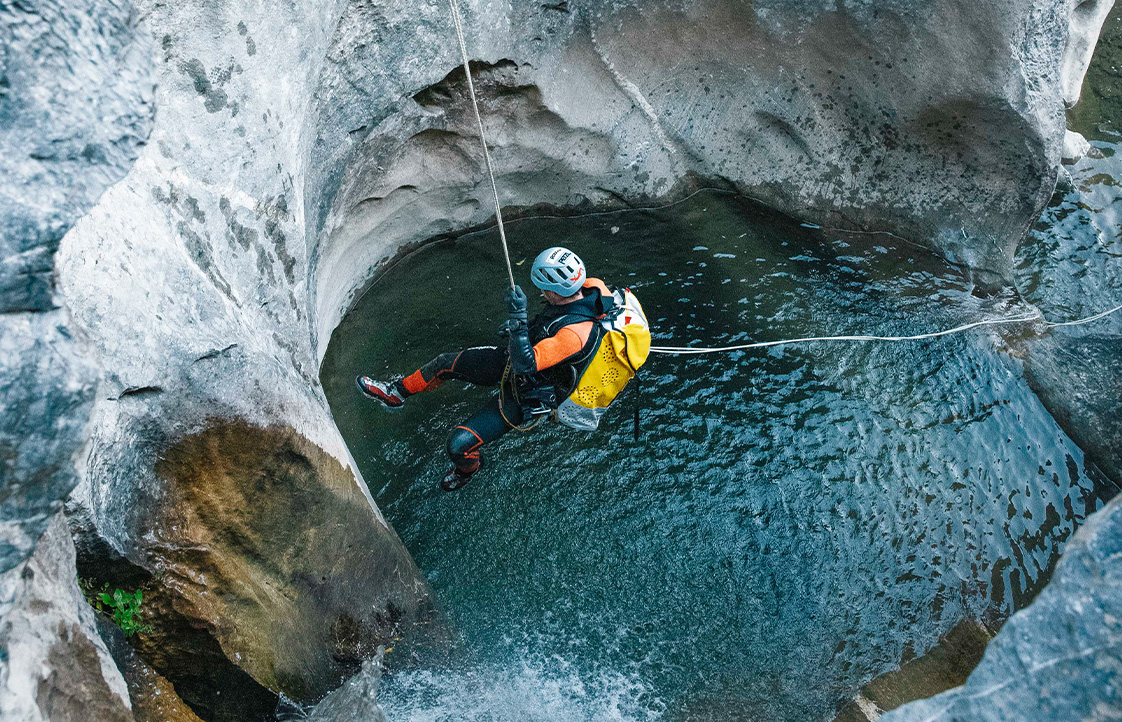
With more than 50 abseils and 1,200 metres of elevation drop, we use the Gave du Yèse as a training ground for international expeditions where sleeping inside the canyon is necessary. It lets us test the gear we'll later use in destinations like Nepal, Jamaica or Ecuador. The load we carry doubles, progress is slower, but the experience of bivouacking between its walls turns this adventure into real preparation for major explorations.
Preparation, technique and safety in canyoneering
However exciting all these canyons are, there's something fundamental you should never overlook before entering any of them: being absolutely sure you'll be able to get out.
This involves a combination of preparation, technique and correctly reading the water flow. Here are some essential recommendations:
- Find out about water flow conditions. An excellent source is canyoneering groups on social media — on Facebook you'll find recent reports and up-to-date first-hand experiences.
- Check detailed reviews. There are many specialist websites where you can review typical conditions, flow levels and specific warnings. If it's your first time in a particular canyon, choose a simple, well-documented one.
- Always have a plan B. One of the most common mistakes in canyoneering — and in many mountain activities — is not having an alternative. Sometimes you plan a trip and when you arrive you find high water levels, storm risk or unfavourable conditions. Without a clear plan B, the group effect and lack of leadership can push you to continue anyway… and that's a serious mistake.
- Train with professionals. There are specialist guides who can help you learn the techniques until you can practise with autonomy and safety.